
The Masai Mara is spectacular all year, but the experience changes a lot from month to month. Some months bring the thundering herds of the Great Migration, others bring green landscapes, newborn animals and quieter roads. Here is everything you need to know about the best time to visit Masai Mara, depending on what you want to see and how much you want to spend.
Best time to visit Masai Mara: the short answer
- For the Great Migration and river crossings: July to October.
- For the best value: January to June, when park fees are half price.
- For dry weather and easy game viewing: late June to October and January to February.
- For green scenery and fewer visitors: April, May and November.
What is the Great Wildebeest Migration?
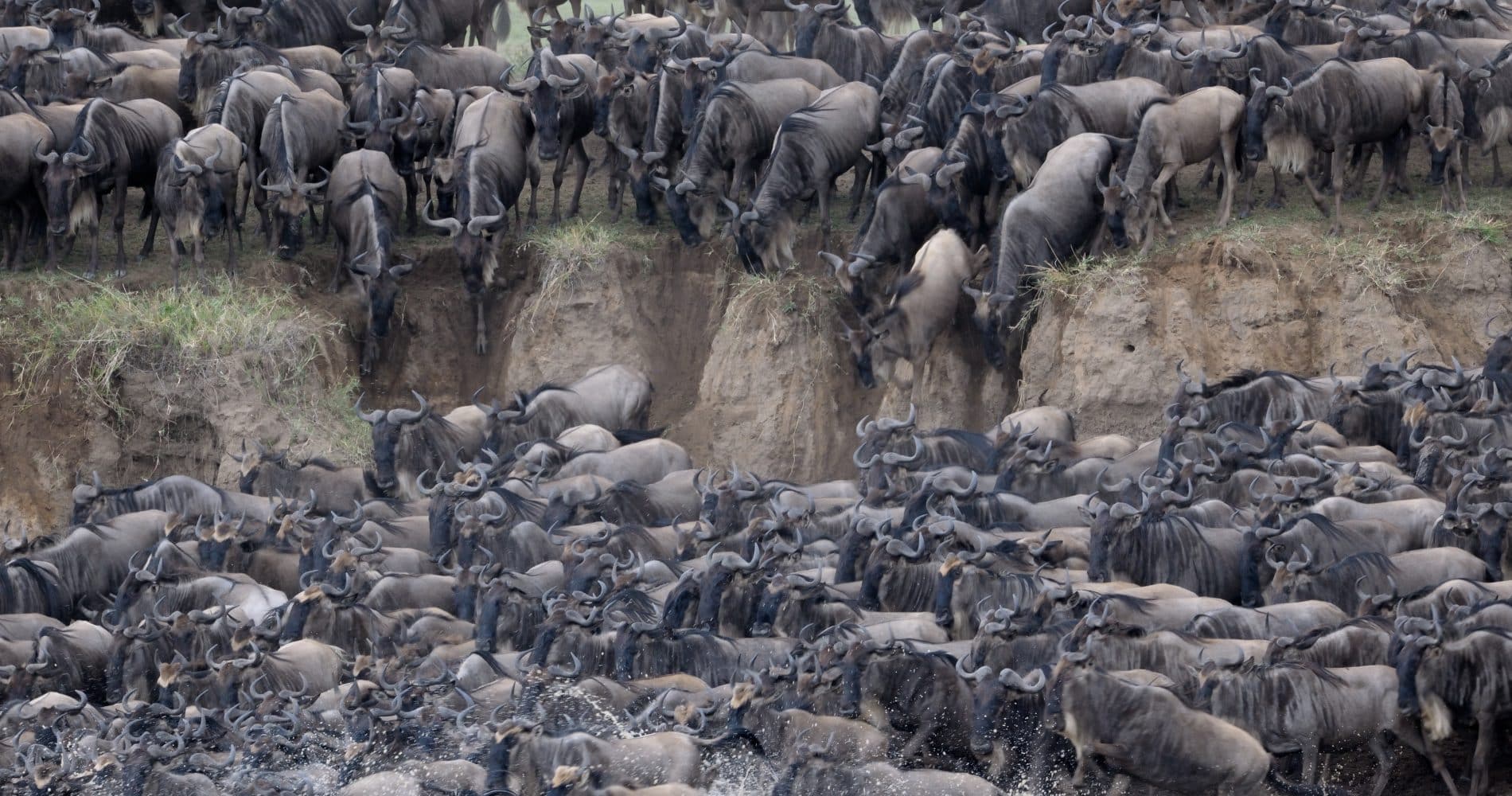
Every year, more than a million wildebeest, together with hundreds of thousands of zebras and gazelles, move in a huge loop between Tanzania’s Serengeti and Kenya’s Masai Mara, following the rains and fresh grass. The herds usually reach the Mara around July and stay until about October. The most dramatic moments are the river crossings, when thousands of animals plunge into the Mara River while crocodiles wait below.
Timing is never exact. The migration depends on rainfall, so herds can arrive a few weeks earlier or later than expected. A good guide knows where to look and how to position the vehicle for a crossing.
Masai Mara weather and wildlife month by month
January and February
Short dry season with warm days and excellent visibility. Predators are active and many animals have young. Park fees are at the lower rate, making this a great value time to travel.
March
Weather is still mostly dry early in the month before the long rains begin. Good game viewing with fewer visitors than peak season.
April and May
The long rains turn the plains green and lush. Some roads get muddy and a few camps close, but you will enjoy quiet game drives, dramatic skies and the lowest prices of the year. Resident lions, leopards and elephants remain easy to find.
June
The rains ease and the grass begins to dry. Late June can bring the first migration herds into the Mara, and you still pay the lower park fee until the end of the month.
July to October: peak migration season
This is the most famous time to visit. The herds fill the plains, river crossings take place at the Mara and Talek rivers, and predators follow the action. It is also the busiest and most expensive period, with park fees at their higher rate. Book well in advance, especially for August.
November
The short rains arrive and the herds start heading back to Tanzania. The landscape turns green again, crowds drop and the reserve feels peaceful.
December
Mostly warm with occasional showers. A popular holiday month for families, combining a short safari with a beach break on the Kenyan coast.
Masai Mara park fees by season
Non-resident adults pay US$100 per day from January to June and US$200 per day from July to December. Kenyan citizens pay KSh 1,500 per day in the first half of the year and KSh 3,000 in the second half. If you are flexible about dates, visiting in the first half of the year can save a significant amount on a three or four day trip. Read our full Masai Mara safari cost guide for a complete breakdown.
Is there a bad time to visit?
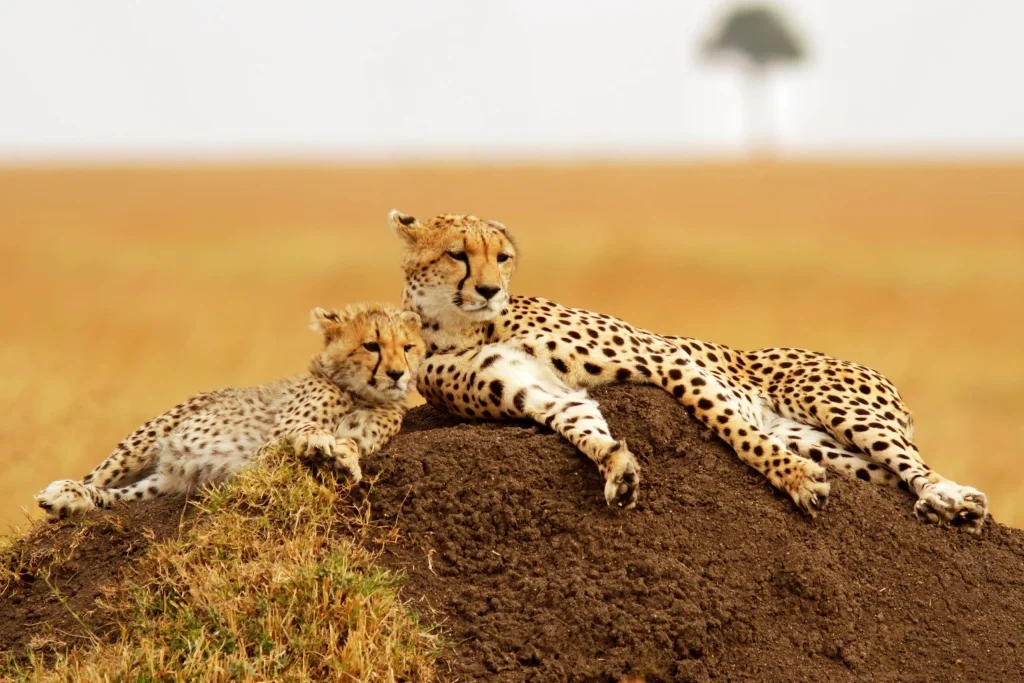
Not really. The Mara is home to large resident populations of lion, cheetah, leopard, elephant and buffalo, so you can see the Big Five in any month. The main trade-off is between seeing the migration and saving money.
Tips for your trip
- Allow at least two full days in the reserve if you want to see a river crossing.
- Pack layers: early mornings can be cold, even in the dry season.
- Book July to October trips several months ahead.
- Combine the Mara with Lake Nakuru or Lake Naivasha to see flamingos, rhinos and hippos.
Great Migration calendar: where are the herds each month?
The wildebeest migration is a year-round cycle across the Serengeti-Mara ecosystem. Knowing where the herds are helps you choose between a Kenya and a Tanzania safari.
- December to March: southern Serengeti and Ndutu, Tanzania. This is the calving season, when hundreds of thousands of calves are born and predators are very active.
- April to May: central and western Serengeti, as the long rains fall.
- June: western corridor and Grumeti River, with the first river crossings.
- July to October: northern Serengeti and the Masai Mara, Kenya. Peak season for Mara River crossings.
- November: the herds move south again through the Serengeti after the short rains.
So if you want to see the migration in Kenya, the best time to visit Masai Mara is between July and October.
Where to see Mara River crossings
River crossings happen at several points along the Mara and Talek rivers. Crossings are unpredictable: herds can gather on the bank for hours before one animal makes the leap and the rest follow. A patient guide and a full day in the reserve give you the best chance.
- Main Mara reserve: covers most crossing points along the Mara River and is easily reached by road from Nairobi.
- Mara Triangle: the western section of the reserve, known for well-maintained roads and fewer vehicles.
- Private conservancies: bordering the reserve, with limited vehicle numbers and activities such as walking safaris and night drives.
Best time for a Kenya safari overall
The Masai Mara is only one part of a Kenya safari. The two dry seasons, from late June to October and from January to February, are the best time for most of Kenya’s parks, including Amboseli, Tsavo, Samburu and Lake Nakuru. Animals gather around water sources, vegetation is thinner and sightings are easier.
The green season from March to May and in November has lower prices and beautiful scenery, and is a great time for birdwatching, as migratory birds arrive from Europe and Asia.
Best time to visit Masai Mara for your travel style
- First-time safari: July to October for the migration, or January to February for great wildlife at a lower price.
- Photographers: August and September for crossings, or the green season for dramatic skies and lush backgrounds.
- Families: school holidays in August and December work well; book early.
- Honeymooners: June or September to October, when the weather is lovely and you can add a beach stay in Diani or Zanzibar.
- Budget travellers: January to June, when Masai Mara park fees are half price.
How many days do you need in the Masai Mara?
Three days is the minimum for a rewarding Masai Mara safari, giving you one full day of game drives. Four days is ideal during migration season, when an extra full day greatly improves your chances of seeing a river crossing. Our 4-day Maasai Mara safari from Nairobi is designed exactly for this.
Frequently asked questions
What is the best month to see river crossings?
August and September usually offer the most crossings, though they can happen any time from July to October.
Can I see the migration in Tanzania instead?
Yes. From December to March the herds are in the southern Serengeti for the calving season. Our 5-day Serengeti and Ngorongoro safari is a great option during those months.
When does the migration arrive in the Masai Mara?
The herds usually start arriving in July and stay until around October, but the exact timing changes every year depending on rainfall.
Is the Masai Mara worth visiting outside migration season?
Absolutely. Lions, cheetahs, leopards, elephants and buffalo live in the Mara all year, and you will enjoy quieter game drives and lower prices.
What is the cheapest time to visit Masai Mara?
April and May, during the long rains, are usually the cheapest months. January to June as a whole has lower park fees than July to December.
What is the weather like in the Masai Mara?
Days are generally warm, often in the mid to high 20s Celsius, while early mornings and nights can be cool. Rain falls mainly in March to May and in November.
Book your Masai Mara safari
Ready to go? Our 3-day joining Masai Mara safari departs daily from Nairobi, and our 4-day Lake Nakuru and Maasai Mara safari adds rhinos and flamingos to your trip. Tell us your dates and we will recommend the best option.
Leave a Reply